Your ERP project has stalled
Implementation is over time and over budget. The integrator is blaming the business, the business is blaming the integrator. You need someone on your side of the table.
Interim & fractional CIO
Senior IT leadership for operating businesses: ERP strategy, vendor management, AI deployment and cost control, with practical accountability for delivery.
A PRACTICAL STARTING POINT
An interim CIO provides leadership through a defined period of change. A fractional CIO works alongside your leadership team on an ongoing basis, typically two to four days per month. We agree the arrangement around your business, taking responsibility for technology strategy, ERP direction and IT spend.
THE RIGHT FIT
Implementation is over time and over budget. The integrator is blaming the business, the business is blaming the integrator. You need someone on your side of the table.
You've inherited another company's tech stack. Two ERPs, three CRMs, overlapping licences, no documentation.
Your SaaS bill has doubled in two years. You need someone to audit, rationalise, and renegotiate without breaking what works.
Your IT team has never run an AI project. You don't need a chatbot — you need to know where AI actually moves the needle in your operation.
FROM IDEAS TO DELIVERY
A written read on your current estate: systems, licences, contracts, and the actual cost of IT against revenue. Benchmarked against the comparable bracket for your size, sector, and growth stage — so you know whether you're under-investing, over-paying, or roughly where you should be.
Whether to consolidate, migrate, extend or stay; which platform and integrator to choose; and how to run the project without it taking over the business. Richard’s hands-on Business Central experience brings practical judgement to the decision.
A line-by-line look at every IT vendor — what you're paying, what's renewing, what's overlapping, and what can be renegotiated. SaaS spend doubles quietly inside a growing SME; the work here is to take a hard look and recover the margin without breaking what works.
A written assessment of where AI could improve your operation, paired with a 90-day deployment plan for the highest-value use case. Drawn from experience shipping agentic systems into an operating business.
The practical baseline: identity, access, backups, endpoint, MFA, and an incident response plan you've actually tested. Plus the certification path that fits your customer requirements — Cyber Essentials Plus is the usual starting point, ISO 27001 if your customers are asking for it.
The hardest hires you'll make and the easiest to get wrong. We help you write the brief, sit on the interview panel, and onboard the person — whether that's a first IT manager, an ERP analyst, or a data engineer. We'd rather help you hire well than become the dependency.
A clean monthly read on what IT is delivering, where the risk sits, and what's coming. Designed to be the IT line on the board pack — not a 40-slide deck no one reads.
HOW WE WORK
Two weeks with your IT lead, finance, and operations — auditing systems, contracts, and the actual cost of IT.
A written 12-month IT plan tied to business outcomes, prioritised by risk and cost.
We lead vendor conversations, ERP decisions, and AI deployments from inside your leadership team.
Measure, tune, hand over. Engagements typically transition into a lighter governance retainer.
IN PRACTICE
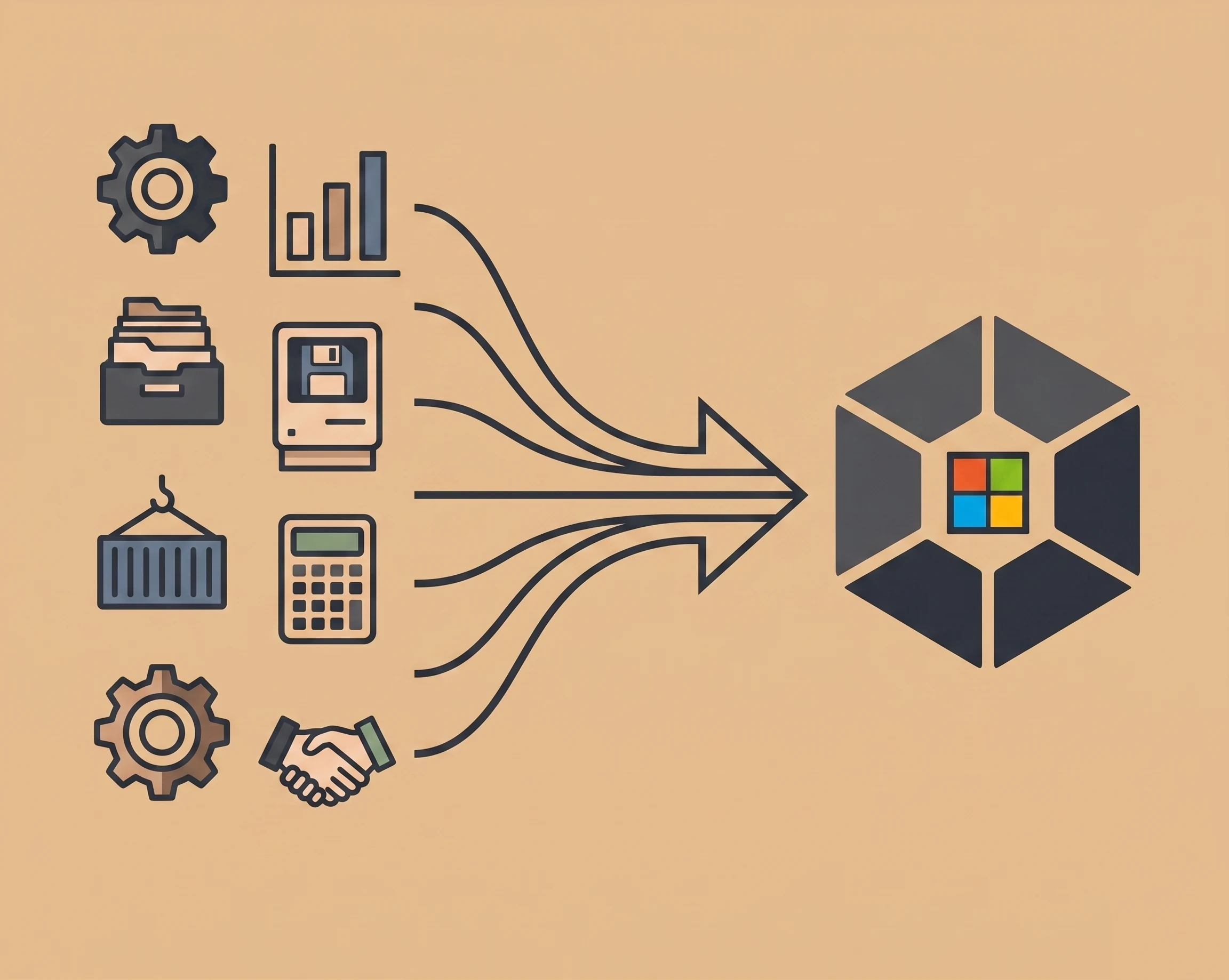 Read Eight brands. One joined-up ERP.
OPERATIONAL TECHNOLOGY
Consolidating an industrial group onto a single ERP estate, with shared processes and a clearer view of the business.
Read the case study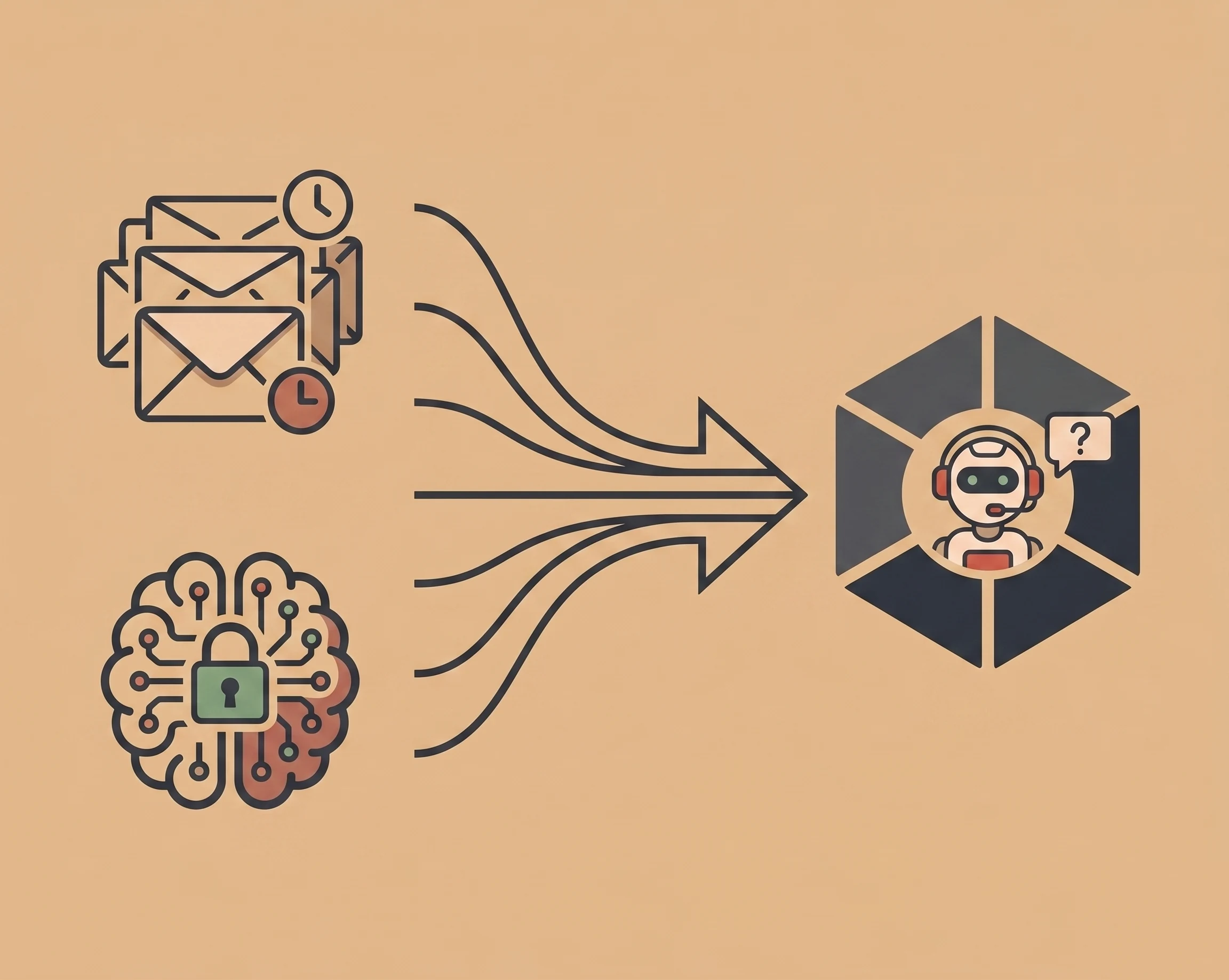 Read Decades of knowledge. Ready for the next enquiry.
AI & AUTOMATION
An agentic customer support system that brings together three decades of correspondence, live stock and pricing to help the team draft useful replies.
Read the case studyUSEFUL TO KNOW
An interim engagement suits a defined transition: covering a leadership gap, rescuing a programme or integrating an acquisition. Fractional support provides ongoing senior leadership where a full-time hire is not yet justified. We agree the time commitment, responsibilities and review points around the situation.
On retainer, we're accountable for your technology strategy, your ERP direction, and your IT spend. In practice that's leading the difficult vendor conversations, sitting on the leadership team for IT decisions, owning the AI deployment roadmap, and giving the board a written read on technology risk and cost. The day-to-day operational work stays with your IT manager — we provide the executive layer alongside them, not a replacement for them.
An IT director runs operations — the helpdesk, the network, the day-to-day vendor relationships. A CIO is strategic and board-facing — what we should buy, what we should retire, and what the technology spend should produce for the business. A fractional CIO sits in the executive role part-time, complementing your existing IT manager rather than replacing them. If you don't yet have an IT manager and you're running on a couple of outsourced contracts, we should talk about whether you need both.
Yes. Richard Sanderson has extensive experience with a multi-tenant Business Central estate, including Continia finance automation, HubSpot integration and post-acquisition data migration. We can support Business Central, NAV and Dynamics-related decisions, and will be clear where a platform needs a specialist outside our experience.
We can lead the practical security baseline: identity, access, backups, incident response and the path towards Cyber Essentials Plus or ISO 27001 readiness. Specialist security operations can be delivered through a managed service provider, with clear accountability for the relationship. Where a business needs a full-time CISO, we will be direct about that requirement.
Yes — that's often a discrete project alongside the retainer, sometimes instead of it. Typical engagement runs three to six months: tech diligence pre-deal, then ERP, identity, and policy integration post-deal, then transition to BAU. If you're acquiring, the cheapest version of this conversation is before you sign, not after.
Typically £5–50M turnover, 30–250 staff, with at least one in-house IT or operations person to work alongside. If you're smaller than that, an MSP plus an MD with strong opinions usually does the job. If you're much larger, you should be hiring a full-time CIO and we can help you specify the role.
YOUR NEXT CHAPTER STARTS HERE
Tell us what you want to change. We’ll help you find a practical next step and agree the scope before work begins.
Let’s talk about your businessAn introductory conversation. A practical next step.